440 West End Avenue, Suite 1C New York, NY 10024


Parents spend years helping their children build healthy habits. They encourage nutritious meals, establish bedtime routines, and schedule regular medical checkups. Yet one of the most important preventive health measures is often underestimated: routine pediatric dental exams.
Many childhood dental problems begin quietly. A cavity can develop without pain, a bite issue may emerge gradually, and early signs of gum inflammation can go unnoticed at home. Routine dental exams help identify these concerns before they affect a child’s comfort, development, or confidence. More importantly, they create opportunities to prevent problems rather than simply treat them.
At West End Avenue Pediatric Dentistry, we believe preventive care is one of the most valuable investments parents can make in their child’s long-term health. Dr. Robert Peracchia, together with Dr. Alexis Cohen and Dr. Mariam Ahmad, regularly helps families understand how oral health influences overall well-being and development. If you have questions about your child’s dental health, we invite you to visit our dental office and schedule a preventive evaluation designed around your child’s unique needs.
According to the Centers for Disease Control and Prevention (CDC), more than 50% of children aged 6 to 8 have experienced a cavity in at least one baby tooth. Tooth decay remains one of the most common chronic childhood conditions in the United States, making preventive dental care more important than ever.
Why Are Routine Pediatric Dental Exams Important?
Routine pediatric dental exams help detect developing problems early, support healthy growth, and reduce the likelihood of future dental complications. They provide valuable insight into how a child’s teeth, gums, and jaws are developing over time.
Children’s mouths undergo constant changes throughout infancy, childhood, and adolescence. Primary teeth erupt, permanent teeth begin developing beneath the gums, and jaw structures grow rapidly. Regular examinations allow dental professionals to monitor these changes and ensure development is progressing properly.
Routine exams help:
- Detect cavities before they become painful
- Monitor tooth eruption patterns
- Evaluate jaw and bite development
- Identify early signs of gum disease
- Track oral habits that may affect development
- Recommend preventive treatments when needed
- Reinforce healthy oral hygiene practices
As children’s dental development occurs so quickly, even a six-month delay in evaluation can allow small concerns to become larger problems.
Why Do Pediatric Dental Exams Matter Even When a Child Has No Pain?
Many dental problems develop silently before symptoms appear. Routine exams help identify concerns before children experience discomfort or visible signs of disease.
Parents are often surprised to learn that children can have cavities, enamel defects, and developing bite problems without showing any obvious symptoms. By the time pain appears, treatment may be more involved than it would have been during the earliest stages.
Preventive evaluations allow dental professionals to detect:
- Small cavities
- Enamel weaknesses
- Bite irregularities
- Early gum inflammation
- Tooth eruption concerns
- Signs of grinding or clenching
This proactive approach helps preserve healthy teeth while minimizing the need for more extensive treatment later.
How Often Should Children Have Dental Exams?
Most children benefit from routine dental examinations every six months. Some children may require more frequent visits depending on their individual risk factors and developmental needs.
Regular visits create consistent opportunities to evaluate oral health changes and reinforce positive habits. Children with a history of cavities, orthodontic concerns, enamel defects, or certain medical conditions may require additional monitoring.
For busy families balancing school schedules, extracurricular activities, and daily responsibilities, maintaining a consistent examination schedule provides a reliable way to stay ahead of potential dental issues.
What Happens During a Pediatric Dental Exam?
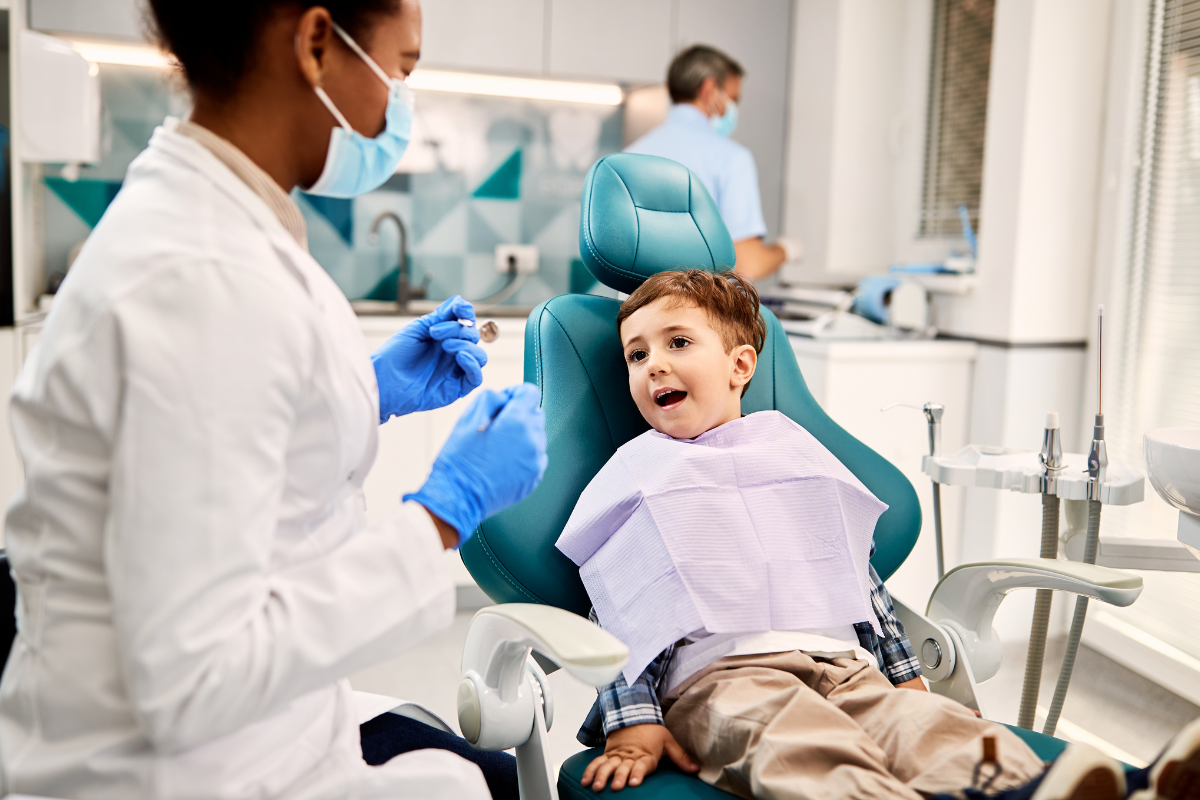
A pediatric dental exam involves much more than checking for cavities. The visit evaluates the entire oral environment, including teeth, gums, jaw development, and overall oral health.
Comprehensive Oral Evaluation
During the examination, the dental team assesses:
- Teeth for cavities and wear
- Gum health
- Jaw growth
- Bite alignment
- Oral tissues
- Existing dental restorations
Each component provides valuable information about a child’s current and future oral health needs.
Preventive Services Commonly Recommended During Exams
Depending on a child’s age and oral health needs, routine visits may include:
- Fluoride treatment recommendations
- Dental sealant evaluations
- Cavity-risk assessments
- Oral hygiene guidance
- Nutritional counseling
- Monitoring of developmental milestones
These preventive measures help strengthen teeth and reduce the risk of future dental concerns.
Parent Education and Guidance
One of the most valuable aspects of pediatric dental care is education. Parents receive practical recommendations regarding brushing techniques, flossing habits, dietary choices, sports protection, and oral development milestones.
What Pediatric Dentists Often Notice Before Parents Do
Routine examinations allow pediatric dentists to identify subtle developmental changes that may not be obvious at home. Early detection often leads to simpler and more effective interventions.
At our practice, we frequently identify early enamel concerns, developing bite irregularities, oral habits, and eruption patterns before they create noticeable symptoms. Because children’s mouths grow and change rapidly, these observations can provide important insight into future oral health.
This is one reason why families searching for a trusted pediatric dentist in NYC often prioritize preventive care rather than waiting for symptoms to appear.
Can Routine Dental Exams Prevent Future Dental Problems?
Yes. Regular examinations help identify and address developing concerns before they progress into more significant oral health issues.
Many common childhood dental conditions begin gradually. Routine monitoring allows dental professionals to intervene earlier, often reducing treatment complexity and helping preserve healthy tooth structure.
| Concern | Benefit of Early Detection |
| Cavities | Smaller, more conservative treatment |
| Bite Issues | Earlier orthodontic evaluation |
| Gum Inflammation | Improved long-term gum health |
| Tooth Eruption Problems | Better developmental guidance |
| Harmful Oral Habits | Reduced risk of alignment complications |
Preventive care is one of the most effective ways to protect a child’s smile throughout their developmental years.
How Local Lifestyle Habits Can Influence Children’s Oral Health
Daily dietary and lifestyle habits play a significant role in cavity risk and overall oral health. Routine exams help identify patterns that may affect a child’s developing smile.
Families throughout the Upper West Side often spend weekends exploring Riverside Park, visiting the American Museum of Natural History, or enjoying local favorites from neighborhood establishments such as Zabar’s and Levain Bakery. These outings frequently involve snacks and beverages consumed throughout the day.
While enjoying these experiences is part of family life, frequent exposure to sugars and carbohydrates can increase cavity risk when proper oral hygiene is not maintained. Routine dental exams help evaluate whether dietary habits are affecting oral health and provide practical recommendations that fit a family’s lifestyle.
Parents looking for a kids’ dentist in New York City often appreciate receiving personalized guidance that aligns with their child’s daily routine rather than generic recommendations.
How Pediatric Dental Exams Support Overall Health
Oral health and overall health are closely connected. Routine dental exams may reveal signs of issues that extend beyond the teeth and gums.
Dental professionals often observe patterns that can influence a child’s overall well-being.
Routine evaluations may identify:
- Mouth-breathing habits
- Sleep-related concerns
- Nutritional deficiencies
- Developmental abnormalities
- Signs of chronic oral inflammation
These findings can sometimes support earlier intervention and improve long-term health outcomes.
Families seeking a pediatric dentist in NYC frequently value this broader approach because oral health plays an important role in a child’s growth, comfort, and daily function.
Why Consistency Builds Better Long-Term Habits
Children who attend routine dental visits are more likely to develop positive attitudes toward oral healthcare and maintain stronger hygiene habits as they grow.
Dental anxiety often develops when visits occur only during emergencies or after symptoms appear. Regular preventive appointments create familiarity and help children view oral healthcare as a normal part of maintaining their health.
Consistent visits help children:
- Build trust with dental professionals
- Develop confidence during appointments
- Learn proper oral hygiene habits
- Understand the value of prevention
- Reduce fear associated with dental care
Many families searching for a kids’ dentist in New York City discover that preventive visits provide benefits that extend far beyond simply checking for cavities.
Families looking for a UWS pediatric dentist or a kids dentist UWS often value the continuity of care that comes from establishing a long-term relationship with a pediatric dental team that understands their child’s evolving needs.
Looking for Guidance About Your Child’s Oral Health?
Whether your child is due for a routine exam or you have questions about their dental development, preventive evaluations provide valuable insight into their oral health. Early assessments often provide reassurance while helping identify concerns before they become more significant.
Supporting Healthy Smiles Through Every Stage of Growth
Routine pediatric dental exams are not simply appointments on a calendar. They are opportunities to monitor development, prevent disease, reinforce healthy habits, and support a child’s overall well-being. Through consistent preventive care, families can help children maintain healthier smiles while reducing the likelihood of future dental complications.
At West End Avenue Pediatric Dentistry, our goal is to help every child build a strong foundation for lifelong oral health through education, prevention, and personalized care.
Schedule Your Child’s Preventive Dental Evaluation
Every child deserves individualized preventive care based on their unique oral development and health needs. If it has been several months since your child’s last dental exam or you have questions about their dental growth, we encourage you to visit our dental office.
Book an appointment today to schedule a personalized diagnostic evaluation and receive professional guidance tailored to your child’s specific oral health needs.
Frequently Asked Questions
At what age should my child first visit a pediatric dentist?
Children should generally have their first dental visit by age one or within six months of their first tooth erupting. Early visits help establish healthy habits and monitor development.
How often should children receive routine dental exams?
Most children benefit from exams every six months. Some children with higher cavity risk or developmental concerns may require more frequent evaluations.
Can a pediatric dentist detect orthodontic problems early?
Yes. Routine exams allow monitoring of jaw growth, bite development, and tooth eruption patterns. Early identification often creates more treatment options.
Are dental exams necessary if my child brushes well?
Yes. Even children with excellent home care can develop cavities, bite concerns, or developmental issues that require professional monitoring and evaluation.
What are dental sealants, and when are they recommended?
Dental sealants are protective coatings applied to the chewing surfaces of certain teeth. They help reduce cavity risk by protecting vulnerable grooves from bacteria and food debris.
What signs indicate my child should see a pediatric dentist sooner?
Tooth pain, sensitivity, bleeding gums, delayed tooth eruption, persistent bad breath, or visible discoloration should be evaluated promptly by a pediatric dental professional.
Why is preventive pediatric dentistry important for long-term oral health?
Preventive care helps identify concerns early, reduces future treatment needs, supports healthy development, and encourages lifelong oral hygiene habits that protect overall dental health.